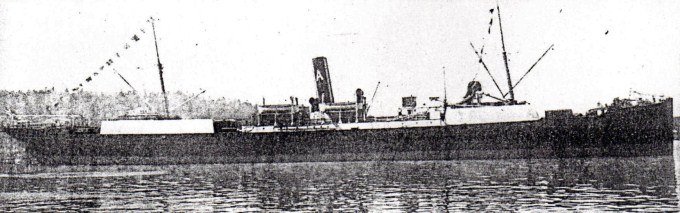
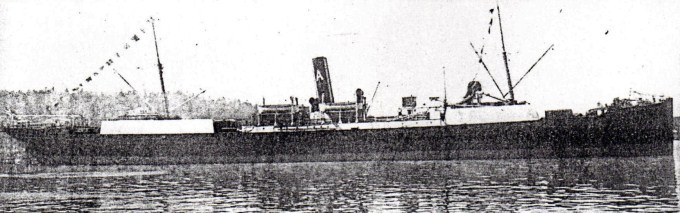
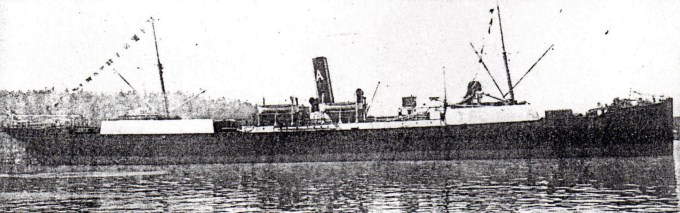
TBG14219110220001 LOCH TAY etter ombyggingen til kokeri. Bilde via Ulf G. Gustavsen.
IMO/off nr
1063072
Kallesignal
MHJG
Flagg
NOR
Skipstype
Dampskip, hvalkokeri / Steam ship, Whale Factory.
Byggeår
1893/12
Shipyard
Palmers' Shipbuilding & Iron Co. Ltd., Newcastle, UK.
Bnr (Sno)
676
Tonnasje
5.474 brt, 3.309 nrt.
Dimensjoner
L: 410,0í - B: 49,3í - D: 30,2í.
Fremdrift
1 x stempel dampmaskin (steam reciprocation), tiple exp. 3-sylindret, syl. diam.: 28”-45”-74”, slagl./stroke: 48”. 407 NHK / 2.593 IHK. Bygget av Palmers' Shipbuilding & Iron Co. Ltd., Newcastle, UK.
Kjeler
2 x doble dampkjeler (røkrørskjeler / fire tube boilers), totalt 8 fyrganger. Total heteflate 6.462 ft². Arbeidstrykk 165 psi. Bygget av Palmers' Shipbuilding & Iron Co. Ltd., Newcastle, UK.
Power
11 knop.
Klasse
Lloydís Reg. +100 A1
Vessel:
TBG142191102
Bemanning
pers,
Disponent
Chr. Monsen, Tønsberg
Eier
A/S Australia Whaling Co., Tønsberg
Havn
Tønsberg
År (y)
1911
Historikk
1893 Bygget som DS LOCH TAY av Palmers' Shipbuilding & Iron Co. Ltd., Newcastle, UK for Dundee Loch Line Steam Ship Co. Ltd. (Andrew Leitch), Dundee, UK. 1911 Solgt til A/S Australia Whaling Co. (Chr. Monsen), Tønsberg. Samme navn. Ombygget til datidens største og mest komplett utstyrte hvalkokeri ved Kaldnes Mekaniske Verksted, Tønsberg. Med ekspedisjonsbestyrer Henrik M. Ellefsen, Stokke ble kokeriet og de tre nye hvalbåtene CAMPBELL, LIONELL og SORELL satt i fangst ved Jervis Bay ved Sydney, Australia og Campbelltown, New Zeeland. Fangsten ble aldri noen suksess grunnet begrenset fangst og konflikter med myndighetene. 1912 Denne sesongen fikk de fangstlisens på et fredet felt på nordvest-kysten av delstatsmyndigheten i Western Australia, noe som utløste en bitter konflikt med sentralmyndighetene. Siste fremstøt var å etablere fangst ved Abrolhos Islands, Western Australia. De kom snart i konflikt med Fremantle Whaling Company (Chr. Nielsen), Larvik som hevdet å ha eksklusiv fangstrett i området. I tillegg kom fagorganisasjonene inn i bildet og forverret situasjonen. Etter 1913-sesongen besluttet selskapet å ikke søke ny fangstkonsesjon. 1914 Selskapet ble oppløst og LOCH TAY ombygget til lasteskip. Deretter utleid til Chr. Nielsen, Larvik. Satt inn i ordinær fraktefart ved utbruddet av WW1 1916 Ble sittende fast i pakkisen ved Newfoundlandsbankene i 10 dager mens hun var på reise fra Rotterdam, Nederland til New York, NY, USA i ballast. 1918 Grunnstøtte og ble vrak 23/10 ved Cap Ruby, Marokko mens hun var på reise fra La Plata, Argentina til Gibraltar for ordre med en last hvete.
History
1893 Built as SS LOCH TAY at Palmers' Shipbuilding & Iron Co. Ltd., Newcastle, UK for Dundee Loch Line Steam Ship Co. Ltd. (Andrew Leitch), Dundee, UK. 1911 Sold to A/S Australia (Chr. Monsen), Tønsberg. Same name. Converted to a state of the art whale-processing vessel by Kaldnes Mekaniske Verksted, Tønsberg. LOCH TAY with manager Henrik M. Ellefsen, Stokke and the three new whale catchers CAMPBELL, LIONELL and SORELL began catching off Jervis Bay near Sydney, Australia and Campbelltown, New Zealand. This season was very disappointing due to limited catching and problems with the authorities. 1912 This season they were granted a license by the authorities of Western Australia to catch whales off the coast of Western Australia. This began a bitter conflict with the sentral government. They then began catching around the Abrolhos Islands, Western Australia but came into problems with Fremantle Whaling Company (Chr. Nielsen), Larvik who claimed exclusive rights to catch whales in the area. After the1913 season they withdrew from whaling due to a disappointed production result and a series of conflicts with Australian authorities and trade unions. 1914 Owners liquidated the whaling company and converted the Loch Tay to a cargo ship and chartered to Chr. Nielsen, Larvik. Put into ordinary freight trade at the outbreak of WW1. 1916 Stuck in icepack on the Newfoundlands Banks for 10 ddays while on a voyage from Rotterdam, Netherland to New York, NY, USA in ballast. 1918 Grounded and wrecked 23/10 at Cap Ruby, Morocco while on a voyage from La Plata, Argentina to Gibraltar for order with a cargo of wheat.
skipshistorie
TBG14219110220001 LOCH TAY etter ombyggingen til kokeri. Bilde via Ulf G. Gustavsen.
Palmers' Shipbuilding & Iron Co. Ltd., Newcastle, UK.
Eier (owner):
A/S Australia Whaling Co., Tønsberg
Disponent (manager):
Chr. Monsen, Tønsberg
Klasse (Class).:
Lloydís Reg. +100 A1
Tonnasje (Tonnage):
5.474 brt, 3.309 nrt.
Dimensjoner (size):
L: 410,0í - B: 49,3í - D: 30,2í.
Lastehandterings syst. (cargo handling.)
Fangstutstyr. (catching equipm.):
Navigasjonsutstyr:
Manøversystemer (syst.for manouvering)
Dekksmaskineri (deck machinery):
Kommunikasjon (comm.):
Kallesignal (Call sign.):
MHJG
Fremdrift (propulsion):
1 x stempel dampmaskin (steam reciprocation), tiple exp. 3-sylindret, syl. diam.: 28”-45”-74”, slagl./stroke: 48”. 407 NHK / 2.593 IHK. Bygget av Palmers' Shipbuilding & Iron Co. Ltd., Newcastle, UK.
Fart/forbr.(speed/cons.):
11 knop.
Hjelpemaskineri (aux):
Tot.el.kraft (el.power):
Kjele(r) (boiler):
2 x doble dampkjeler (røkrørskjeler / fire tube boilers), totalt 8 fyrganger. Total heteflate 6.462 ft². Arbeidstrykk 165 psi. Bygget av Palmers' Shipbuilding & Iron Co. Ltd., Newcastle, UK.
Bemanning (crew):
pers,
Bysseutstyr (galley equipment):
Historikk:
1893 Bygget som DS LOCH TAY av Palmers' Shipbuilding & Iron Co. Ltd., Newcastle, UK for Dundee Loch Line Steam Ship Co. Ltd. (Andrew Leitch), Dundee, UK. 1911 Solgt til A/S Australia Whaling Co. (Chr. Monsen), Tønsberg. Samme navn. Ombygget til datidens største og mest komplett utstyrte hvalkokeri ved Kaldnes Mekaniske Verksted, Tønsberg. Med ekspedisjonsbestyrer Henrik M. Ellefsen, Stokke ble kokeriet og de tre nye hvalbåtene CAMPBELL, LIONELL og SORELL satt i fangst ved Jervis Bay ved Sydney, Australia og Campbelltown, New Zeeland. Fangsten ble aldri noen suksess grunnet begrenset fangst og konflikter med myndighetene. 1912 Denne sesongen fikk de fangstlisens på et fredet felt på nordvest-kysten av delstatsmyndigheten i Western Australia, noe som utløste en bitter konflikt med sentralmyndighetene. Siste fremstøt var å etablere fangst ved Abrolhos Islands, Western Australia. De kom snart i konflikt med Fremantle Whaling Company (Chr. Nielsen), Larvik som hevdet å ha eksklusiv fangstrett i området. I tillegg kom fagorganisasjonene inn i bildet og forverret situasjonen. Etter 1913-sesongen besluttet selskapet å ikke søke ny fangstkonsesjon. 1914 Selskapet ble oppløst og LOCH TAY ombygget til lasteskip. Deretter utleid til Chr. Nielsen, Larvik. Satt inn i ordinær fraktefart ved utbruddet av WW1 1916 Ble sittende fast i pakkisen ved Newfoundlandsbankene i 10 dager mens hun var på reise fra Rotterdam, Nederland til New York, NY, USA i ballast. 1918 Grunnstøtte og ble vrak 23/10 ved Cap Ruby, Marokko mens hun var på reise fra La Plata, Argentina til Gibraltar for ordre med en last hvete.
History in English:
1893 Built as SS LOCH TAY at Palmers' Shipbuilding & Iron Co. Ltd., Newcastle, UK for Dundee Loch Line Steam Ship Co. Ltd. (Andrew Leitch), Dundee, UK. 1911 Sold to A/S Australia (Chr. Monsen), Tønsberg. Same name. Converted to a state of the art whale-processing vessel by Kaldnes Mekaniske Verksted, Tønsberg. LOCH TAY with manager Henrik M. Ellefsen, Stokke and the three new whale catchers CAMPBELL, LIONELL and SORELL began catching off Jervis Bay near Sydney, Australia and Campbelltown, New Zealand. This season was very disappointing due to limited catching and problems with the authorities. 1912 This season they were granted a license by the authorities of Western Australia to catch whales off the coast of Western Australia. This began a bitter conflict with the sentral government. They then began catching around the Abrolhos Islands, Western Australia but came into problems with Fremantle Whaling Company (Chr. Nielsen), Larvik who claimed exclusive rights to catch whales in the area. After the1913 season they withdrew from whaling due to a disappointed production result and a series of conflicts with Australian authorities and trade unions. 1914 Owners liquidated the whaling company and converted the Loch Tay to a cargo ship and chartered to Chr. Nielsen, Larvik. Put into ordinary freight trade at the outbreak of WW1. 1916 Stuck in icepack on the Newfoundlands Banks for 10 ddays while on a voyage from Rotterdam, Netherland to New York, NY, USA in ballast. 1918 Grounded and wrecked 23/10 at Cap Ruby, Morocco while on a voyage from La Plata, Argentina to Gibraltar for order with a cargo of wheat.
Kilde: DnV, Lloydís, Starke, Tønnessen: Den Moderne Hvalfangst Historie, bind 2, Osc. Alb. Johnsen: Tønsberg i vår tid, bind 2.. Samlet og bearbeidet av Steinar Norheim og Ulf W. Gustavsen. Sist oppdatert: 17/01-2011 (SN/UWG/RI/PS)